
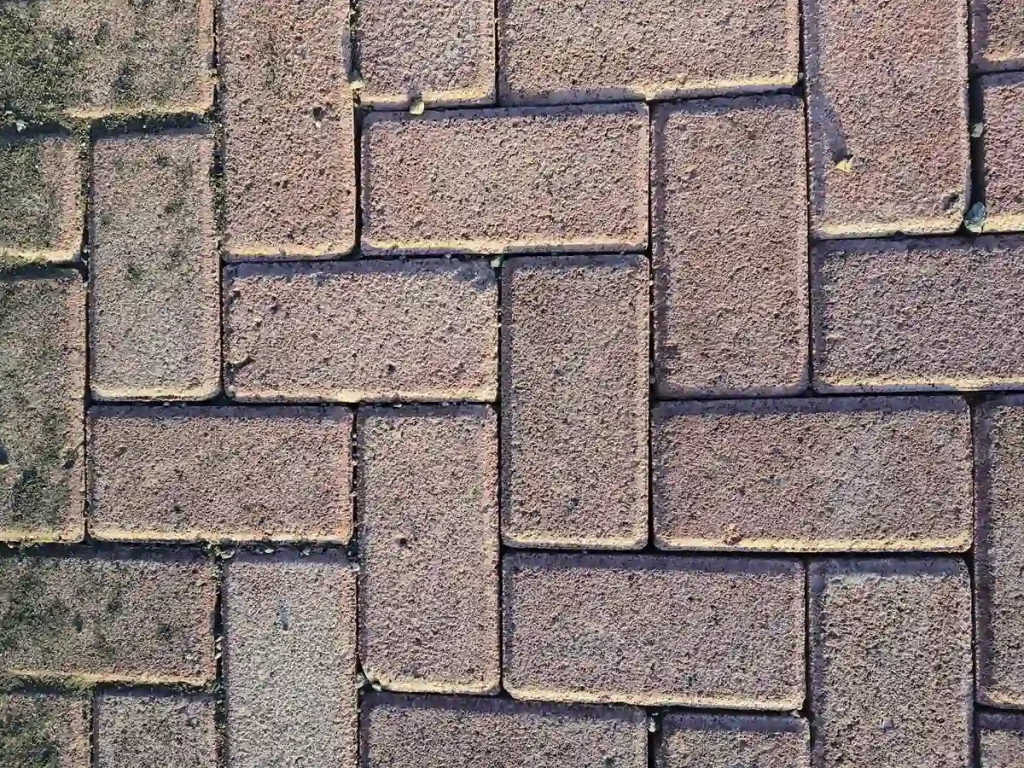
Yes, you can paint paving bricks. Whether it lasts is the real question, and painting paving bricks is one job the paint manufacturers have already covered in their own datasheets. Plascon publishes a procedure for painting concrete paving, then excludes paving from that product’s ten-year guarantee.
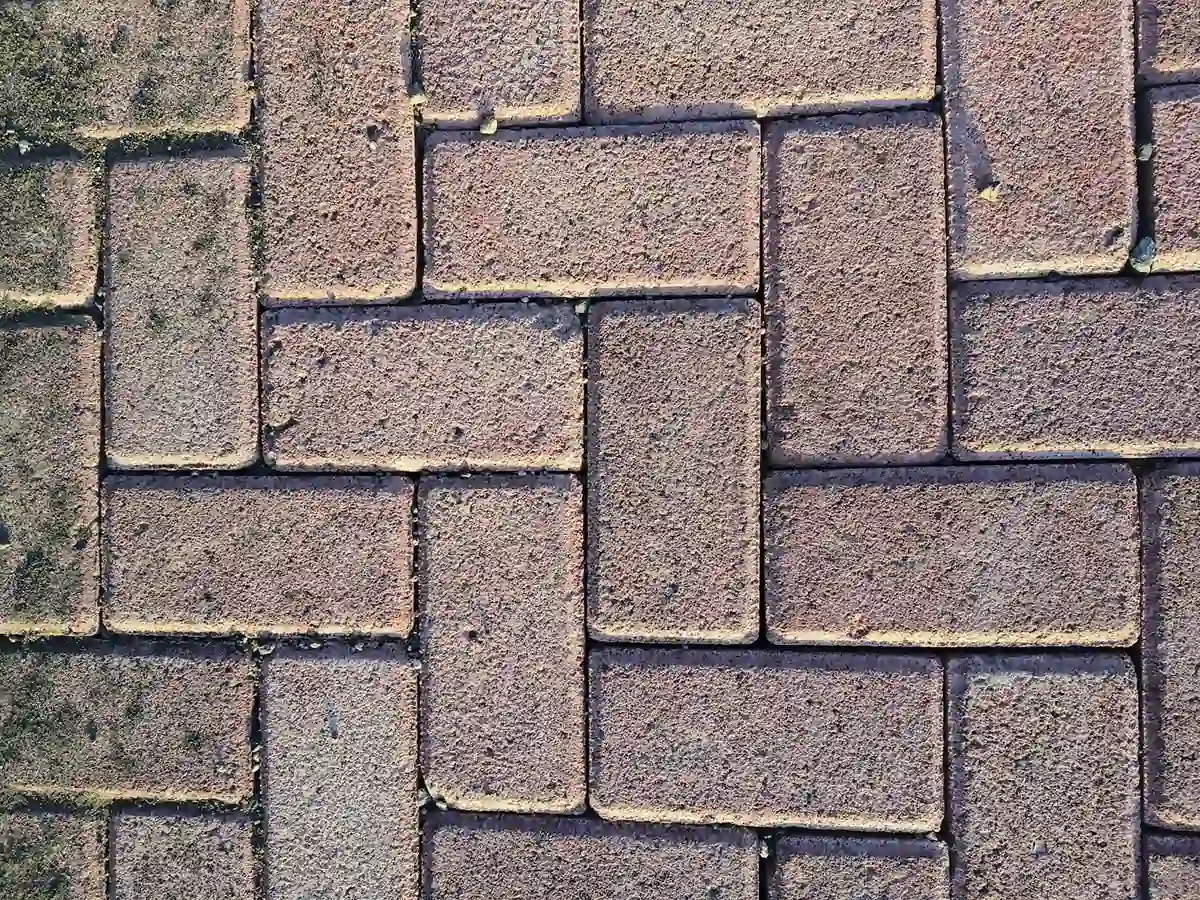
Why Painting Paving Bricks Usually Fails
The brick is not the problem. A concrete or clay paving brick takes up water, and a segmental pavement is drained by its falls and its sand-filled joints, not by a sealed surface. Four things work against a coating.
The Paint Wants a Damp Course Your Paving Does Not Have
Start with moisture. Plascon Stoep Enamel, the best-known South African stoep paint, requires that “all concrete and cement floors must be protected by suitable damp coursing”, and caps substrate moisture below 5%. Segmental paving has no damp course. It sits on about 25 mm of bedding sand over a granular base, with no impermeable layer in the build-up.
The Blocks Move Relative to One Another
UTG 2, the South African guideline for segmental block pavements, records that in trafficking studies the blocks generally did not crack, spall or rupture: deformation came from intact blocks moving relative to one another. Joints are part of that design, 2 to 6 mm wide on concrete blocks and sand-filled so load transfers between them. They are also where the movement happens, and a paint film crosses every one. No published test covers that point, so take it as reasoning, not a finding.
The Brick Can Afford to Wear. A Film Cannot.
CMA Book 2 expects the brick to wear under intense trafficking: “provided the pavers are of adequate strength, the abrasion does not affect the structural integrity of the paving”. A brick has depth to give up, and a coating does not: Plascon gives Easy Living Roof & Paving a total dry film thickness of 70 to 100 microns over two coats. Binder type counts too. ICPI Tech Spec 5, from the US interlocking paving trade body, lists “alkyds, esters, and polyvinyl acetates” among the sealers not recommended for pavers, and Plascon Stoep Enamel declares itself alkyd.
A Film That Cannot Breathe Traps the Salts Behind It
The fourth is efflorescence, the white bloom after rain: free lime carried to the surface and left there as water evaporates. On bare paving CMA calls it superficial and usually self-resolving, given a route out for the moisture. Among the conditions ICPI gives for whitening or drawn efflorescence is a sealer that “does not allow moisture to move through to the surface of the paver and evaporate”.
What the Paint Guarantees Actually Cover
Ask how long paving paint lasts and no manufacturer we checked publishes a figure: not Plascon, Fired Earth, Africote, GripSeal or Paintcor.
Plascon Easy Living Roof & Paving carries a “10 year quality guarantee on roofs (excludes paving)”. Same tin, same manufacturer: ten years on a roof, paving excluded from that guarantee. The datasheet gives no reason, but the exclusion is in print.
No paint manufacturer we checked claims a permanent finish. The nearest thing to a number comes from ICPI: clear acrylic sealers “generally last for a few years before re-coating is required”.
How to Paint Paving Bricks If You Decide To Anyway
Two parts are harder than they look.
The Procedure Is Not Wash and Paint
Plascon’s datasheet sets out the procedure for concrete paving. The surface must be clean, dry, sound and free of contaminants. Bonding Liquid goes over all of it, 16 hours to dry, then two coats. Steep driveways and ponding water areas are excluded.
Getting It Off Again
Nothing published covers stripping a failed coating off a whole laid pavement; what exists is for spills and stains. ICPI’s method for dried paint is a commercial paint remover, 20 to 30 minutes of dwell and gentle scrubbing. For a urethane sealer, the hardest coating Tech Spec 5 covers, the fallback runs to methylene chloride or sand blasting, work ICPI says is best left to professionals. Both act on the brick face, which under SANS 1200 MJ carries integral colour to at least 5 mm depth. How far into that a method cuts is not published.
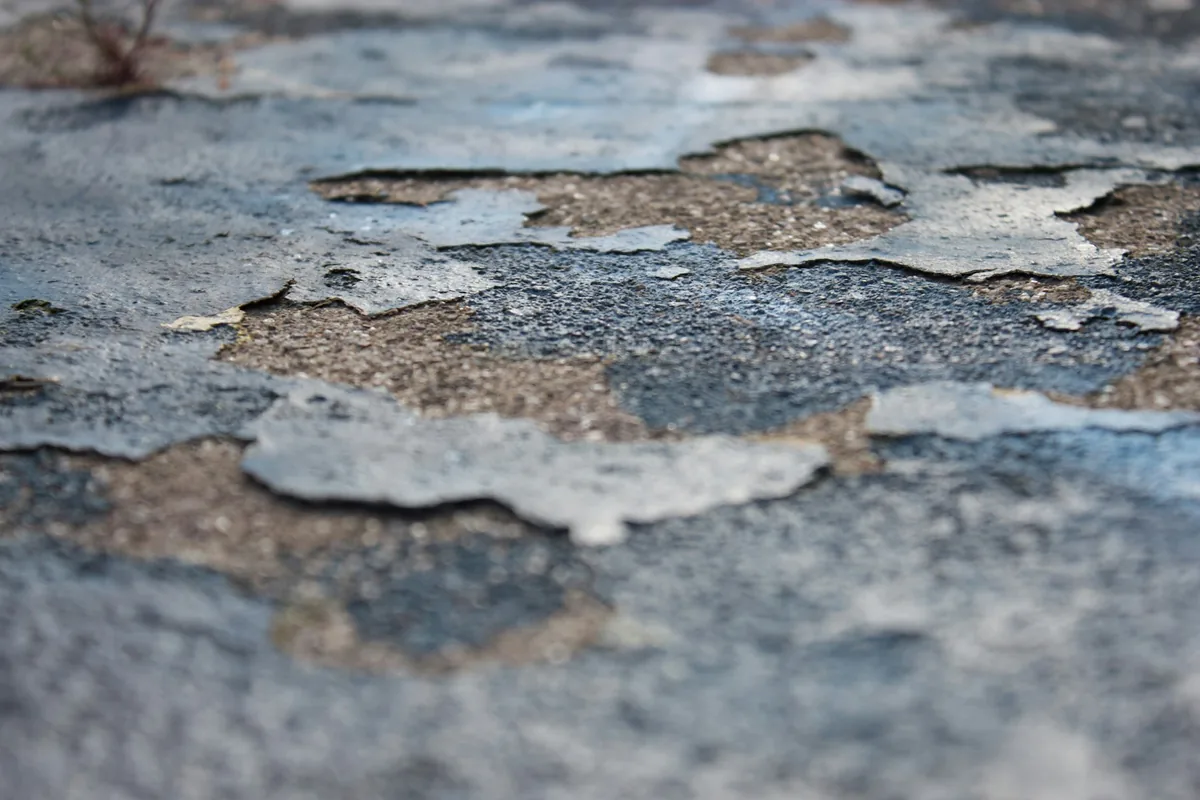
Best Paint for Paving, or a Penetrating Colour System?
Both aim at the same outcome by different routes.
| What matters | Film-forming paint | Penetrating system (CHRYSO ColourSeal) |
|---|---|---|
| How it stays put | Sits on the surface and depends on adhesion | TDS describes it penetrating and reacting with free lime to form an insoluble silicate in the capillaries |
| Substrate required | Thoroughly dry. Stoep Enamel also wants a damp course and moisture below 5% | Sound, porous concrete cleaned back to open pores |
| Preparation | Bonding Liquid, 16 hours, two coats | Deco Net to dissolve cement laitance, washed off under pressure |
| Maker’s guarantee on paving | Plascon’s 10-year guarantee excludes paving | CHRYSO notes it may need reapplication as the floor wears |
| What we guarantee | Not a service we offer | 2 years on the restoration, 5 years expected |
CHRYSO’s own advantages list goes further: the product “eliminates delamination of the surface”. That is a seller’s claim with no published test method, not ours to repeat.
What We Use Instead of Paint
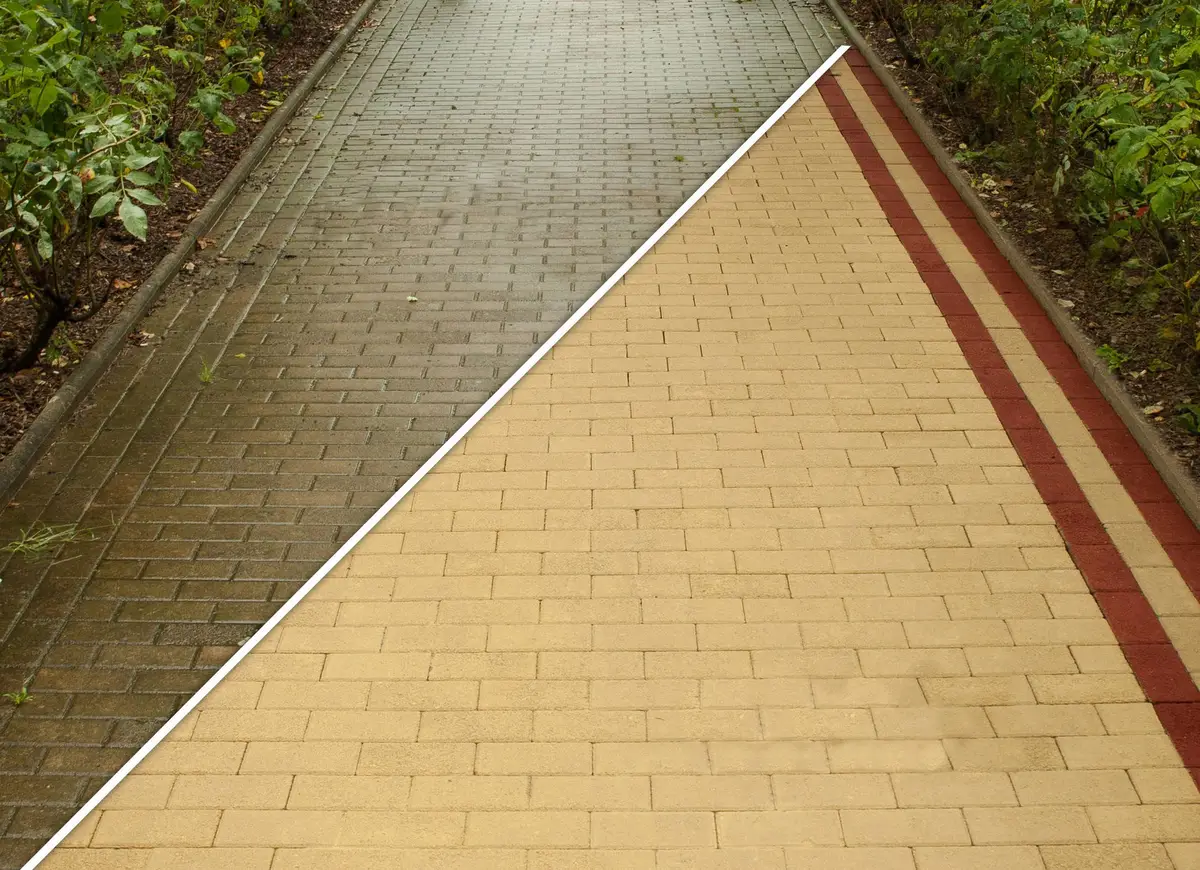
Pretoria Paving has worked on paving across Centurion and Pretoria since 2017, and the recolour and seal service works differently from paint. CHRYSO’s datasheet calls ColourSeal a pigmented coating, and also describes it penetrating and reacting with the free lime inside the brick. The second half is what paint cannot claim. It runs from R149/m² in three steps: Deco Net breaks down cement laitance, two coats of ColourSeal, then a clear top coat.
That top coat is CHRYSO FiniSol Brut, described in its own TDS as a film-forming sealer. It is a thin protective layer over an already-reacted surface, not the colour, and the only product here with published abrasion standards.
One thing worth saying plainly: we do not strip paint. Our preparation is a clean and an acid wash, then treatment. Neither Deco Net nor CHRYSO Concrete Stripper is a paint stripper in CHRYSO’s literature, and the ColourSeal datasheet asks for a substrate “free of oil, loose paint and contaminants”. Paving already painted is a site-visit judgement, and a good reason to decide about paint before you open the tin.
Choosing Paving Paint Colours for a Restored Surface
ColourSeal is offered through us in 8 colours, from warm tans and terracotta to light grey, charcoal and black. CHRYSO says the finished match depends on surface condition, so we confirm the colour against your own paving on site rather than off a chart.
Frequently Asked Questions
Can you paint paving bricks with ordinary stoep paint?
How long does paint last on a paved driveway?
Is painted paving slippery when wet?
Can painted paving be restored later?
Is ColourSeal just paint under another name?
In our experience, faded paving in Pretoria or Centurion is usually not a replacement job, and on this evidence not a painting job either. Request a quotation and we will measure on site at no charge. Pretoria Paving holds 4.9★ on Google.